The ocean is loud
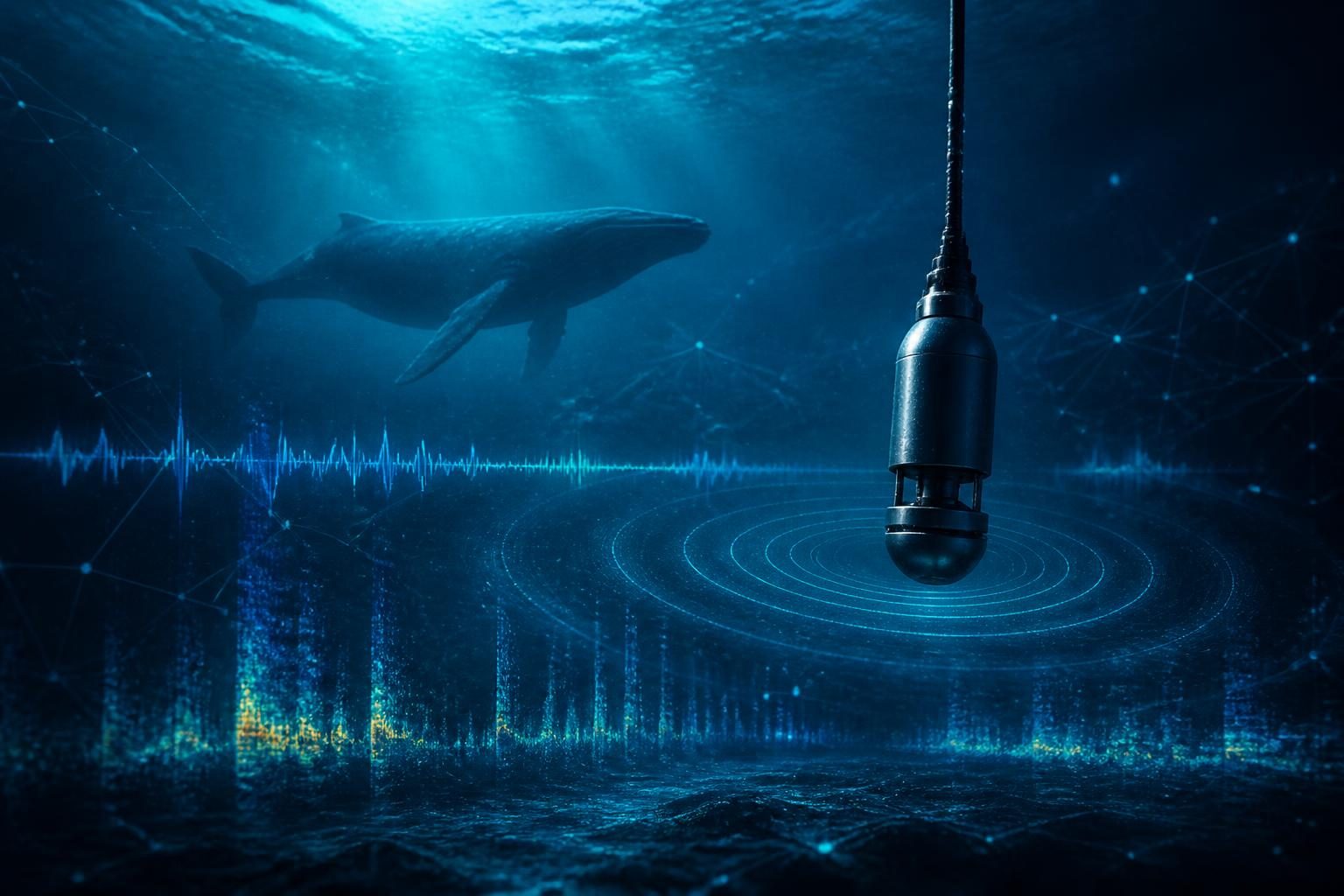
Sound travels farther and faster in water than in air, which is a gift and a curse. A single hydrophone can pick up whales kilometers away — along with ships, seismic surveys, snapping shrimp, and the constant hiss of the sea. Extracting one species' voice from that is the core marine challenge.
From hydrophone to insight
WAVE's marine pipeline runs edge inference right at the hydrophone, flagging species presence in real time instead of storing endless raw audio. High-resolution Superlet spectrograms then resolve the fine structure of calls — the difference between two populations' songs, or the pulsed internal structure of a blue whale's call.
Why it matters for conservation
Real-time marine monitoring isn't academic. It powers automated alerts — a protected species detected near a shipping lane, a poaching boat's engine signature, a sudden silence where there should be song. Turning the ocean's sound into structured, timely data is one of the most direct ways acoustics serves conservation.