Hands-free voice translation
Real-time, voice-activated species detection and translation in 5–7 seconds. No manual input required in the field.
Wild Animal Voice Engine
WAVE is an AI-powered bioacoustics platform that translates, visualizes, and researches animal communication in real time — whale songs, bird calls, elephant rumbles, and wolf howls, decoded in 5–7 seconds.
Watch
A short look at how WAVE listens across oceans, forests, and savannas — and turns raw sound into meaning.
Features
Powered by the NatureLM-audio and Perch 2.0 foundation models, validated against the BEANS benchmark.
Real-time, voice-activated species detection and translation in 5–7 seconds. No manual input required in the field.
Train custom ML models in under 30 seconds with as few as 5 audio samples — identify individuals, populations, and dialects.
A central command center with automated workflows, unified search, and cross-species pattern discovery across your datasets.
Interactive Voronoi diagrams for behavioral correlations and Superlet transforms for ultra-high-resolution spectrograms.
Under-2MB models run on-device with TinyML for offline monitoring at remote stations and on hydrophones.
One platform for terrestrial and underwater bioacoustics — from rainforest canopies to deep-ocean soundscapes.
Technology
Three layers turn raw sound into structured, comparable meaning.
Hydrophones, loggers, and sensors capture signal from dense environmental noise, with inference at the edge.
High-resolution signal processing adapted from neuroscience. It revealed the Chagos pygmy blue whale song is pulsed, not continuous.
NatureLM-audio and Perch 2.0 map vocal patterns without supervision — models trained on one species can help organize another's.
How it works
Three layers turn an animal's call into something a researcher — or a model — can compare, search, and reason about.
WAVE starts where the animals are. Hydrophones, acoustic loggers, and on-device inference pull clean signal out of dense environmental noise — on land and underwater — without shipping raw audio back to a server.
Adapted from neuroscience, the Superlet Transform produces ultra-high-resolution spectrograms — resolving detail that conventional methods blur. It's how WAVE showed the Chagos pygmy blue whale song is pulsed, not continuous.
WAVE builds on open bioacoustic foundation models that map vocal patterns without supervision. Because they learn shared acoustic structure, a model trained on one species can help organize another's vocalizations.
Video library
Long-form explainers on the ideas and engineering behind WAVE.
How WAVE extracts meaning from marine soundscapes — separating whale song from ocean noise and mapping it to behavior.
A field-to-model look at underwater bioacoustics: hydrophones, edge AI, and real-time species presence across marine environments.
Why animal vocalizations are best understood as geometry — embedding calls into high-dimensional space to reveal structure across species.
The engineering behind WAVE — the Technical Triad of bio-logging sensors, the Superlet Transform, and foundation models working together.
Blog
Plain-language deep-dives on the science, the data landscape, and how WAVE turns sound into meaning.

A protected area is only as good as our ability to know what's happening inside it. Continuous listening is quietly becoming one of the most powerful tools for managing and defending the world's wild places.
Read article →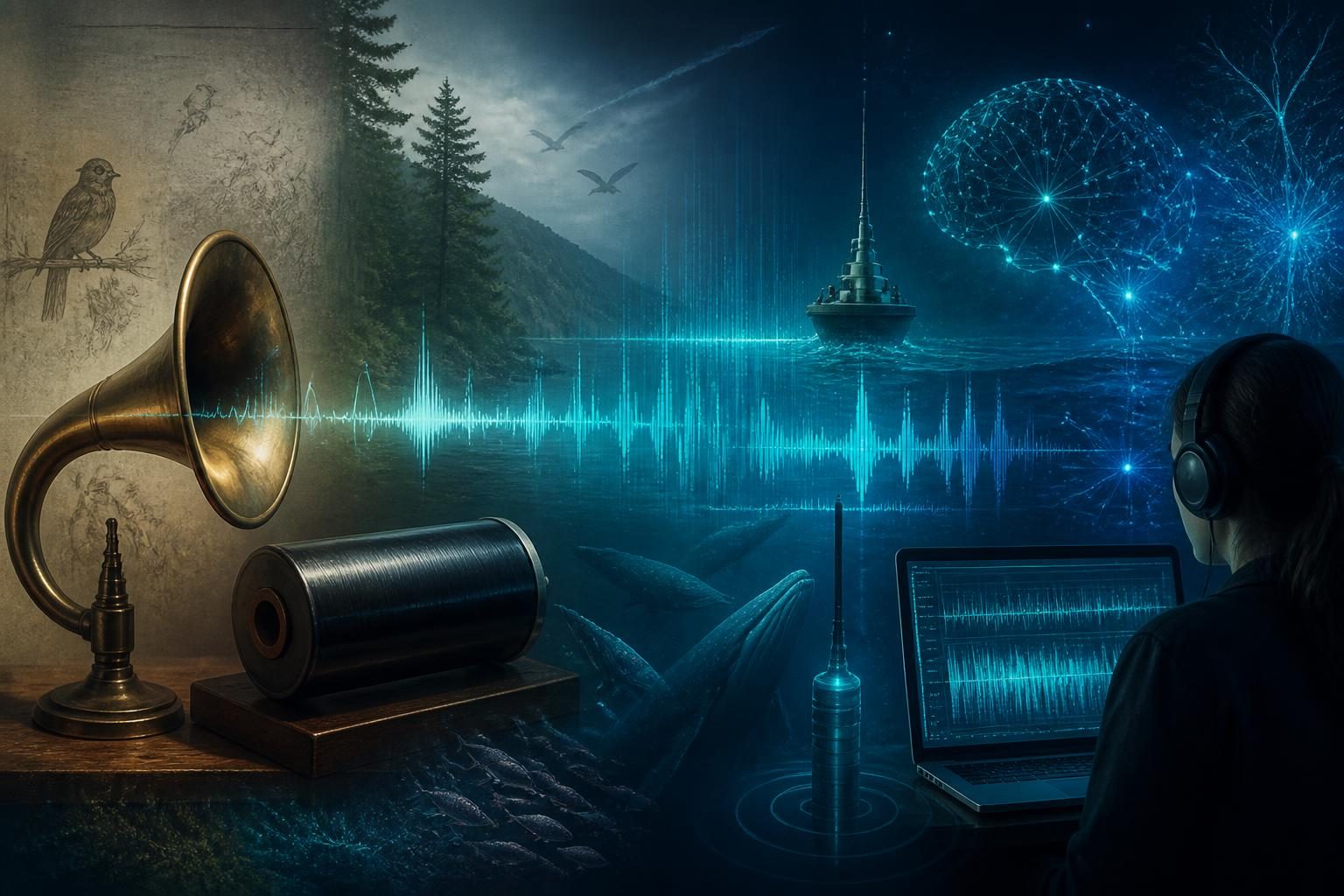
From wax cylinders to foundation models, the story of how humans learned to record, visualize, and finally analyze animal sound at scale — and why each leap changed what questions we could even ask.
Read article →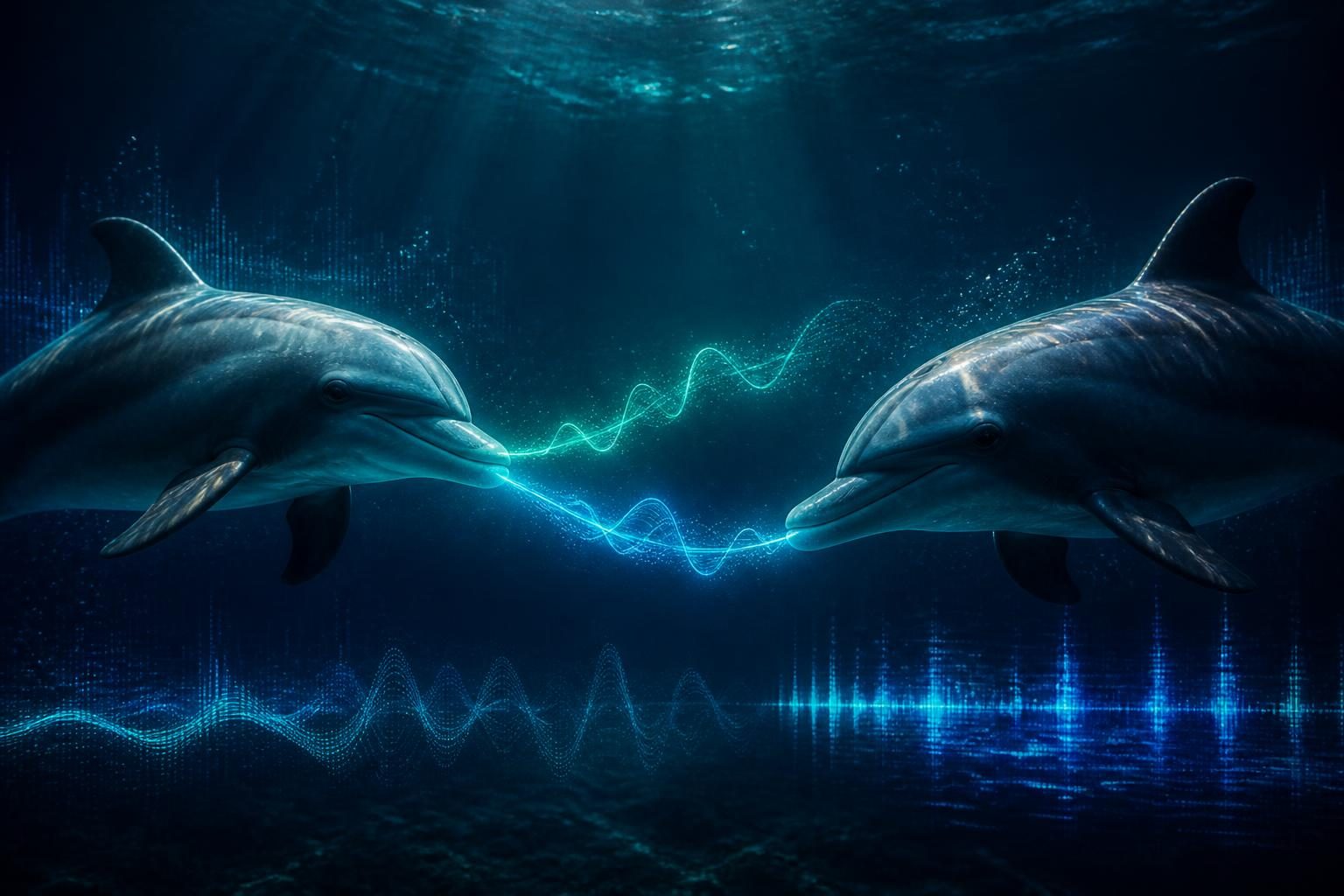
Some dolphins seem to have signature whistles that work a bit like names. It's one of the most tantalizing findings in animal communication — and a perfect case study in how to be excited without overclaiming.
Read article →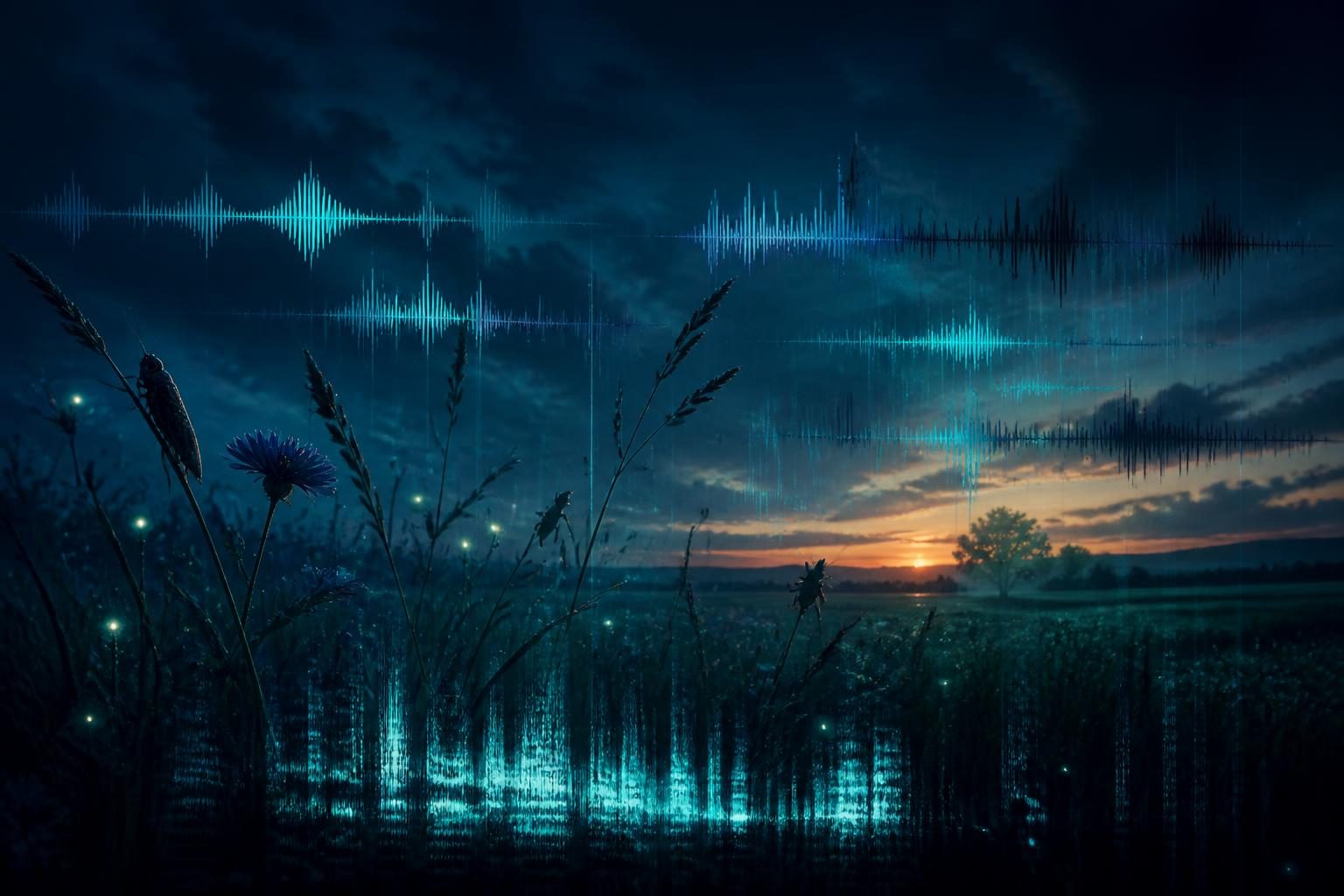
Insects are the backbone of terrestrial soundscapes and the base of countless food webs. As their numbers fall, the world is getting quieter — and acoustic monitoring may be one of our best ways to measure the loss.
Read article →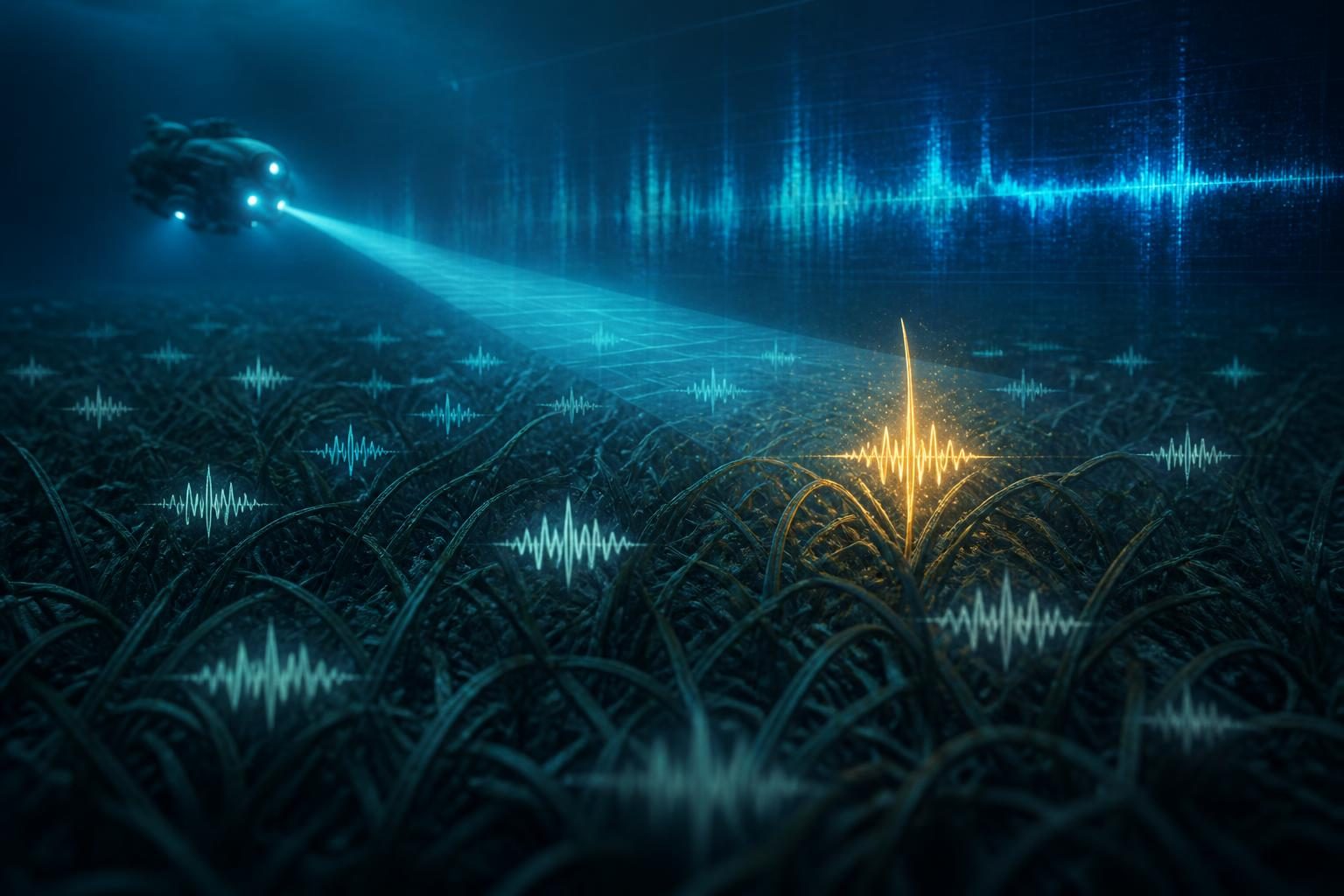
A detector that's 99% accurate can still be wrong most of the time when the target is rare. This counterintuitive math is one of the most important — and most ignored — ideas in acoustic monitoring.
Read article →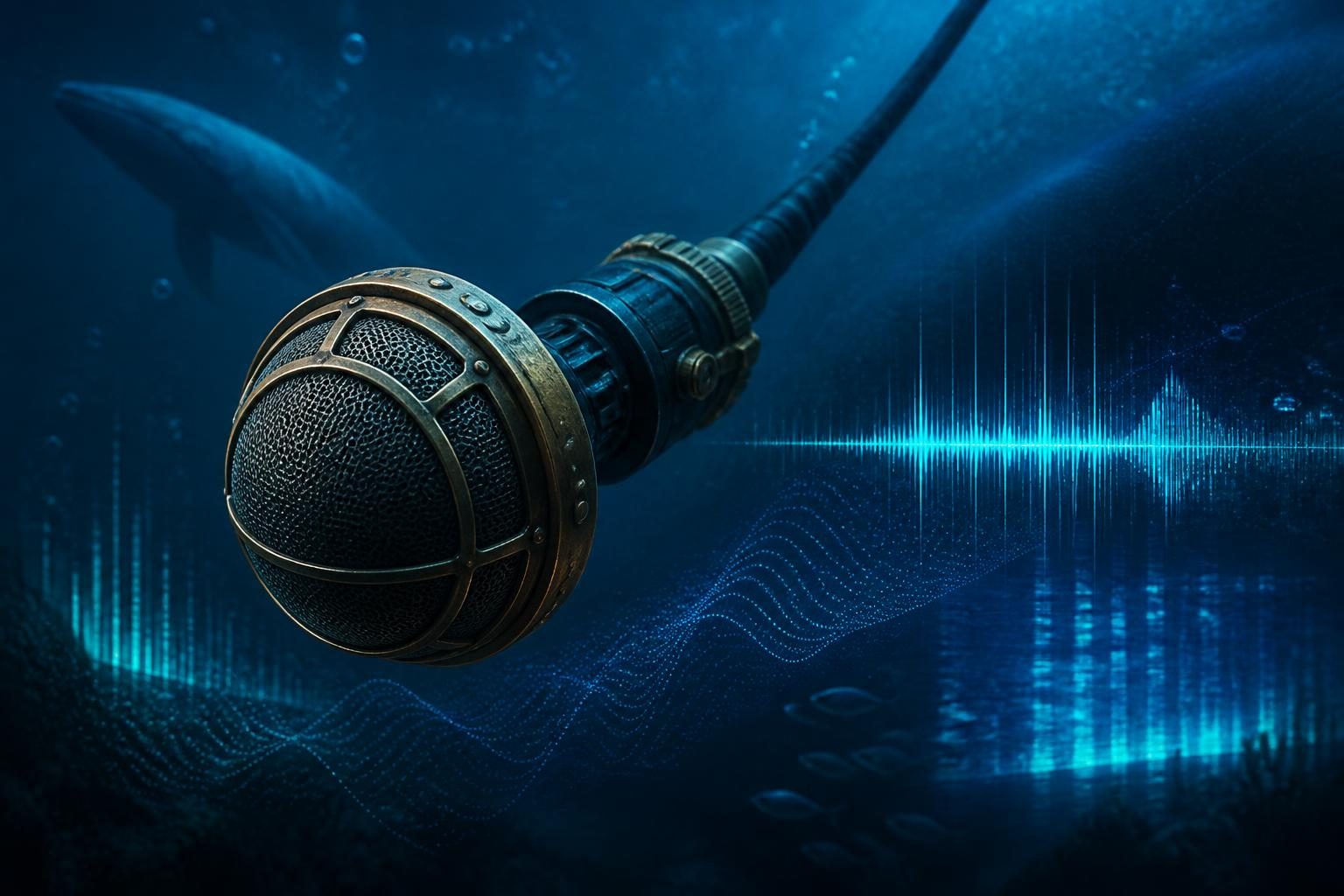
Before you can analyze a whale's voice, something has to hear it underwater. The hydrophone is the unglamorous device that made marine bioacoustics possible — and its quirks shape everything downstream.
Read article →Use Cases
Wet, dirty, hands-full conditions where manual input is impractical — WAVE listens and labels for you.
Always-on audio streams at monitoring stations, with automated alerts for conservation threats.
Population-specific dialect recognition and rare-species detection with limited training data.
Live demonstrations with immediate feedback that make interspecies communication tangible.
Resources
WAVE connects the field's foundational datasets and archives. Search live across iNaturalist and GBIF, or explore the major public sources below.
Bird & wildlife sounds, global, community-contributed
Open ↗World's largest animal media archive; 96% of bird species
Open ↗Marine mammal vocalizations, freely downloadable
Open ↗Citizen-science multi-taxa audio, open archive
Open ↗Preprocessed bioacoustic datasets for machine learning
Open ↗Decoding sperm whale communication; open research
Open ↗Third-largest bioacoustic collection worldwide
Open ↗Species occurrence & biodiversity data, with API
Open ↗Building a research integration? WAVE is designed to plug into these sources. Talk to us about data access →
Try it
Upload an animal sound or name a species. WAVE identifies it, profiles the acoustics, and cross-references validated research data — reference recordings, species facts, and more. Honest by design: it connects real data, it doesn't fake sentence-level translation.
New: the Sound Map arranges clips from multiple species by acoustic similarity — distance means how alike they sound.
Roadmap
Voice translation, custom fingerprinting, visualizations, and the integration hub — all live.
Grow the MIT-licensed engine and developer docs on GitHub; welcome contributors.
An institutional AGI framework of cooperating specialized agents for ecosystem-scale monitoring.
Q&A
Bioacoustic AI is full of hype. We\'d rather earn trust with honest answers.
Membership
Get early access to the platform, priority support, and a voice in the roadmap. Reserve your membership below.
Connect
Researching a species? Building on the open-source engine? Exploring a partnership or membership? Tell us what you're working on.