The sound you stopped noticing
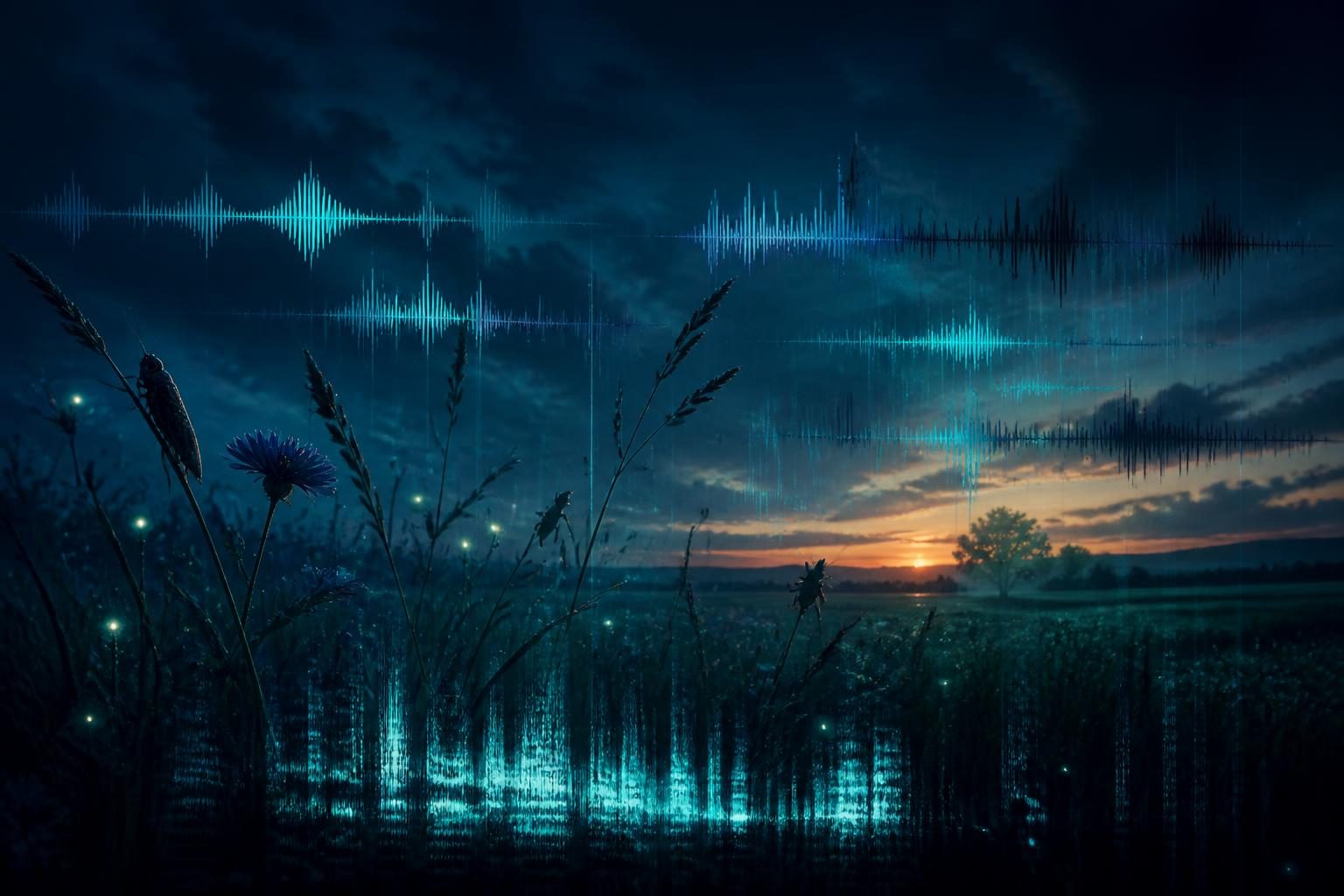
Think of a warm summer night and you probably imagine a sound before an image: the pulsing, layered drone of insects — crickets, katydids, cicadas, a thousand small stridulations woven into a wall of sound. That chorus is one of the most fundamental features of terrestrial soundscapes, and in many places it is thinning. The world is getting quieter in a way that's hard to notice from year to year but unmistakable across decades. Behind that quieting is one of the most serious and under-appreciated ecological stories of our time: the decline of insects.
Bioacoustics has a distinctive role to play here, because insects are loud, ubiquitous, and central to soundscapes — which makes their presence, and their absence, measurable by ear and by algorithm.
Why insect sound matters more than it seems
It's tempting to treat insect noise as mere background, but it's structural in at least two senses. Ecologically, insects are the base of enormous food webs — the food of birds, bats, amphibians, and countless other animals — and pollinators and decomposers on which whole systems depend. When insects decline, the effects ripple upward and outward. Acoustically, insects are often the dominant contributors to the biophony of a terrestrial soundscape, especially at night and in warm seasons. A rich insect chorus is both a sign of a functioning community and a resource other animals literally listen to.
This dual role — ecological keystone and acoustic keystone — is exactly why their decline registers as a change in the soundscape. When the chorus thins, it's not just quieter; it's a signal that something in the community is unraveling.
Listening as a measurement tool
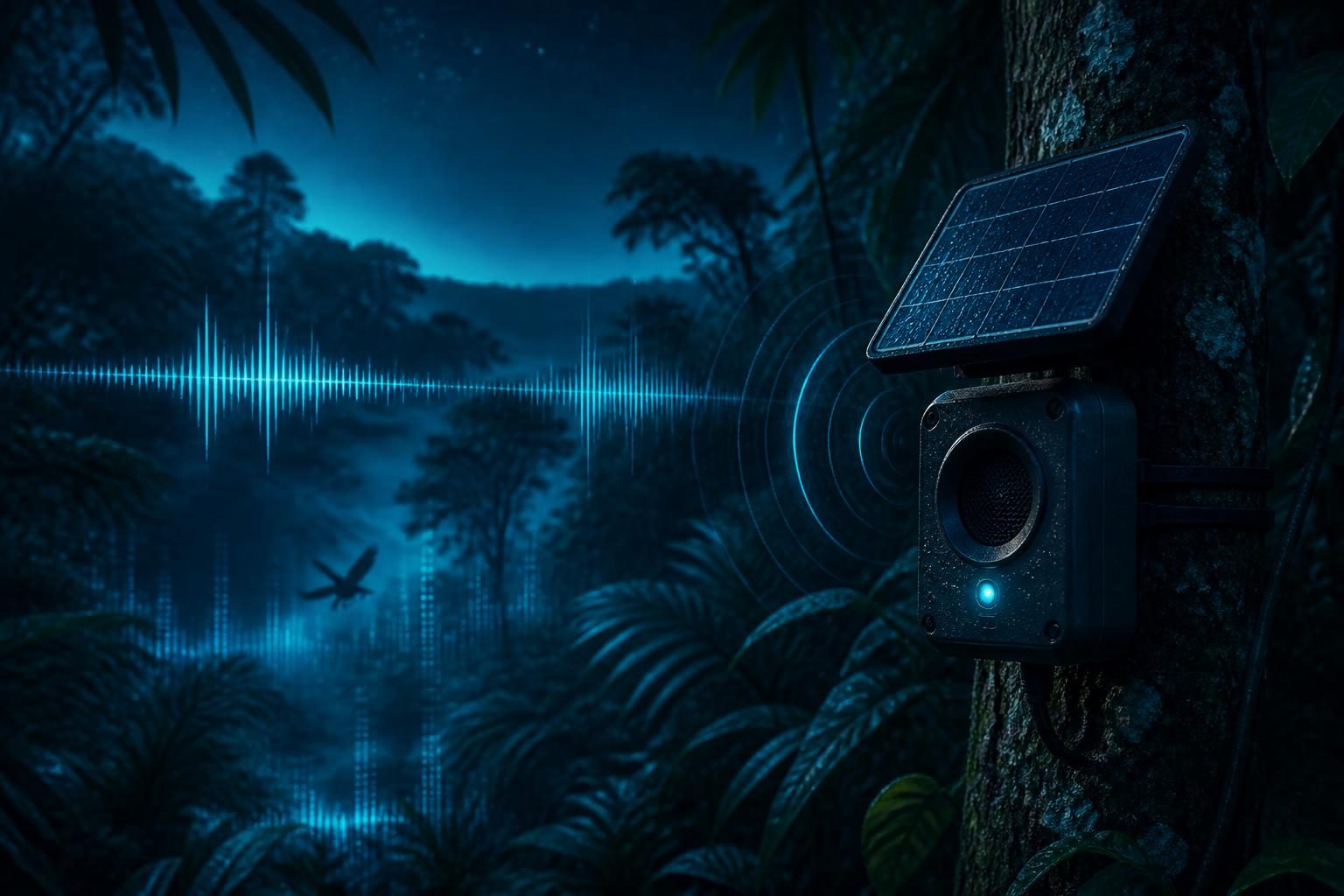
The great difficulty with documenting insect decline is scale and effort. Traditional insect surveys are labor-intensive and patchy, and comparing across years and places is notoriously hard. Acoustic monitoring offers a complementary path: deploy recorders, capture the chorus continuously, and track it over time. Because insect sound is such a large component of the biophony, changes in the overall soundscape can serve as an indicator of insect activity even without identifying every species.
This connects directly to soundscape ecology. Acoustic indices that summarize the diversity, complexity, and temporal patterning of a recording can capture the health of the insect chorus in aggregate. A dawn-to-dusk cycle that flattens, a summer drone that grows sparser year over year, a night that falls quieter than it used to — these show up in the numbers. And because recordings are permanent, a soundscape captured today becomes a baseline against which future decline (or, hopefully, recovery) can be measured.
The honest difficulties
Insect bioacoustics is genuinely hard, and pretending otherwise would undercut the very case for taking it seriously:
- Species identification is tough. Many insects produce broadband, repetitive, or highly similar sounds, and the sheer diversity of species dwarfs the labeled reference data available. Identifying individual species from sound is far less mature than it is for birds.
- Temperature confounds everything. Insect calling rates depend strongly on temperature — many stridulate faster when it's warmer. A "quieter" recording might reflect a cool night, not fewer insects. Disentangling climate-driven variation from genuine population change requires care.
- Detectability varies. Loud, common species dominate recordings; quiet or sparse ones may be present but acoustically invisible. Absence of sound is not proof of absence.
- Baselines are thin. We often lack good historical recordings to compare against, which means much of the value of acoustic monitoring is in the baselines we build now for the future.
These aren't reasons to dismiss acoustic insect monitoring; they're reasons to do it rigorously — treating indices as proxies to be corroborated, accounting for temperature and conditions, and being honest about what a quieter recording can and can't prove.
Where the tools help, and where they don't
An acoustic platform can contribute meaningfully to this story precisely by playing to its strengths and being honest about its limits. It can compute soundscape indices at scale, track the aggregate insect chorus over time, flag anomalies, and build the permanent baselines that future comparisons will need. Where species-level identification is reliable, it can name the callers; where it isn't, it can still measure the chorus as a whole rather than overclaiming precision it doesn't have.
What it can't do is turn a thin, temperature-confounded, baseline-poor dataset into certainty. The responsible framing is that acoustics is one powerful line of evidence among several — to be combined with traditional surveys, environmental data, and careful statistics — not a magic gauge that settles the question alone. This is the same discipline that governs every other corner of bioacoustics: strong tools, honest limits, corroboration over assertion.
The quiet crisis, made audible
There's something haunting about a crisis you can hear. The decline of insects is often invisible — small animals, gradual change, easy to overlook. But the soundscape carries it. The thinning of the summer chorus, the quieter night, the flatter rhythm of a habitat's daily cycle — these are the audible signature of an ecological unraveling that matters far beyond the insects themselves.
That audibility is also an opportunity. Because the change registers in sound, acoustic monitoring gives conservation a way to detect it, measure it, and — crucially — establish the baselines that will let future generations know what was lost or, better, what was saved. Listening well to the smallest and most numerous voices in the chorus may turn out to be one of the most important things bioacoustics does.
The takeaway
The insects that fill our nights with sound are both the foundation of terrestrial food webs and the backbone of terrestrial soundscapes, and their decline is making the world measurably quieter. Bioacoustics can't single-handedly reverse that, but it can hear it — rigorously, at scale, and honestly — turning an easy-to-ignore loss into a documented, trackable signal. The chorus is thinning. The least we can do is listen carefully enough to know by how much, and to notice if it ever begins to swell back.
Building the baseline the future will need
Perhaps the single most valuable thing acoustic monitoring can do for the insect crisis right now is unglamorous: capture good baselines. Much of the difficulty in documenting decline is that we lack rich, comparable historical recordings — we're often trying to measure a change against a past we didn't record. Every carefully documented soundscape captured today becomes a reference point that future researchers can compare against, whether to confirm continued loss or, hopefully, to detect recovery. The recordings outlive the study and the recorder; a soundscape archived now is a gift to a scientist who hasn't been born yet, and it costs little more than the discipline to record and document properly.
That long horizon is a fitting note for the whole subject. The insect chorus took evolutionary time to assemble and is thinning within human lifetimes. We may not be able to reverse that alone, but we can bear honest witness to it — at scale, with rigor, and with baselines that make the change undeniable. Listening carefully is not the same as fixing the problem. But you cannot fix what you refuse to measure, and the chorus, thinning in the warm dark, is asking to be measured while there is still enough of it left to hear.
One line of evidence among several
It bears repeating that acoustics is a contributor to the insect story, not the whole answer, and honesty about that strengthens rather than weakens the case. Population change is best established when multiple independent lines of evidence point the same way: traditional trapping and counts, changes in the animals that depend on insects, environmental data, and acoustic monitoring together. Sound is uniquely good at continuous, non-invasive, large-scale coverage and at capturing the aggregate chorus over time — but it's weaker at species-level precision for many insects and is confounded by temperature and conditions in ways that demand careful statistics. Presenting it as one strong strand in a rope, rather than the whole rope, is exactly the discipline that makes the strand trustworthy.
Why acoustics complements, rather than replaces, other methods
It would be a mistake to position acoustic monitoring as a silver bullet for the insect crisis, and honesty about that is part of using it well. Sound captures the acoustically active fraction of the insect world — the stridulators and singers — while missing silent species entirely, and it's confounded by temperature and by uneven detectability. Traditional methods (physical sampling, standardized counts) capture different slices of the picture, including the silent majority, but at far greater labor and with their own biases.
The power comes from combining them. Acoustics contributes continuous, non-invasive, large-scale coverage and permanent baselines; physical methods contribute species-level ground truth and reach the silent species. Environmental data contextualizes both. Statistics ties them together into defensible conclusions. This is the same principle that runs through all of bioacoustics — each tool used where it's genuinely strong, corroboration over assertion, honesty about limits — applied to one of the most consequential and least visible ecological stories of our time. The chorus is a signal, not the whole picture, and treating it as one line of evidence among several is exactly what makes it trustworthy.